What to Consider When Choosing Plastic Raw Materials for Extrusion?
When people talk about extrusion, they often focus on extrusion mould design or the extrusion line itself. However, as mentioned in our previous blogs about PVC and WPC profiles, plastic raw materials play an equally critical role in determining whether the final product looks good, performs well, and remains stable over time.
From everyday wall panels to outdoor decking and profile components, the choice of raw material directly affects surface quality, strength, processing efficiency, and even long-term customer satisfaction. So before production starts, here are the key points worth considering.
1. Application Comes First: Where Will the Product Be Used?
The first question is always simple: what is this product used for?
Different applications require very different material properties:
Indoor decorative profiles usually prioritize smooth surfaces, color stability, and ease of processing
Outdoor products such as decking, fencing, or exterior wall panels must resist moisture, UV exposure, and temperature changes
Structural or load-bearing profiles require higher strength and dimensional stability
For example, PVC is commonly used for window frames, wall panels, and cable trunking, while WPC is more suitable for outdoor decking and landscaping products because it combines plastic durability with a wood-like appearance.
If the application is not clearly defined at the beginning, problems may appear later during extrusion or even after installation.
2. Material Compatibility with the Extrusion Mould
Not all plastic raw materials behave the same way during extrusion. Flowability, melting temperature, shrinkage rate, and viscosity all affect how the material interacts with the extrusion mould.
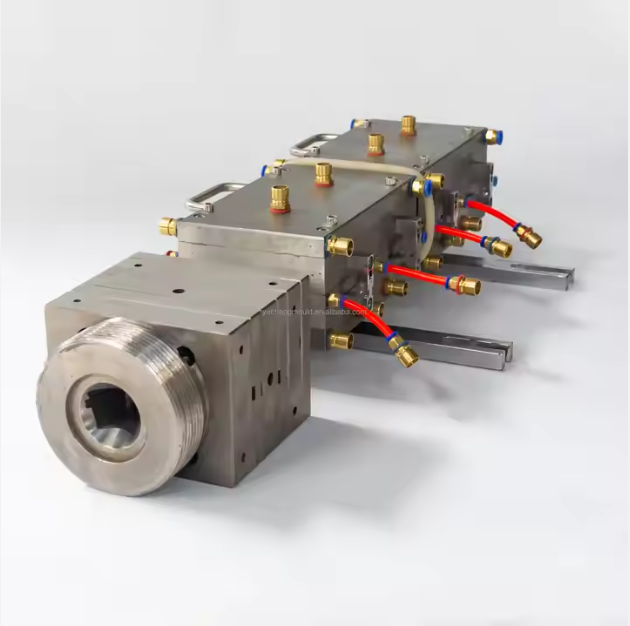
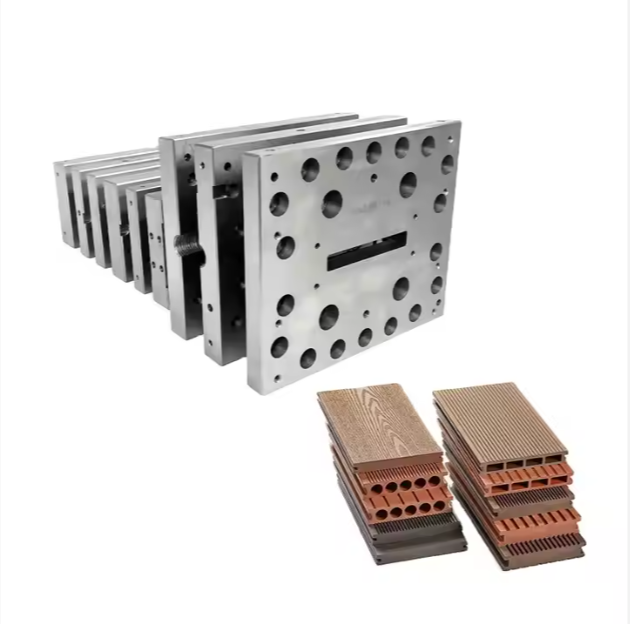
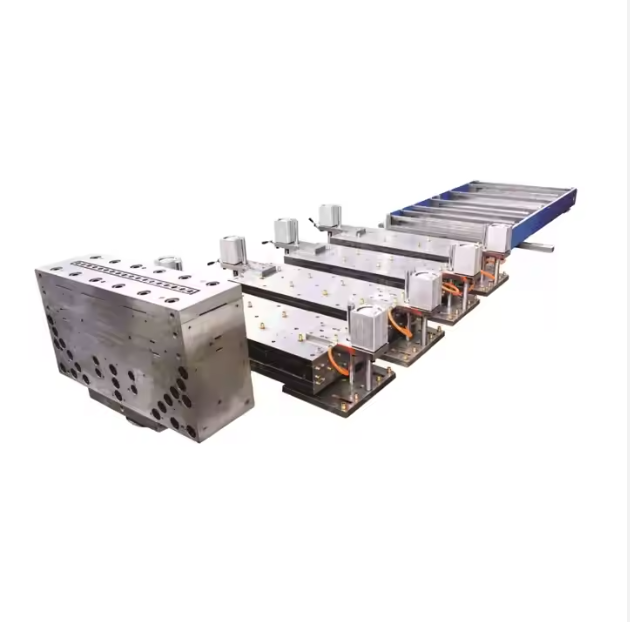
A well-designed extrusion mould—like those developed by Junhui Mould—must be matched with the correct raw material. Otherwise, manufacturers may experience:
Unstable extrusion speed
Poor surface finish
Uneven wall thickness
Excessive wear on the mould
In short, even a high-quality mould cannot perform well if the raw material is not suitable. This is something many beginners overlook at first.
3. Processing Stability Matters More Than You Think
From a production point of view, stable extrusion is often more important than extreme performance values. A material that looks great on paper but behaves unpredictably during processing can quickly become a headache.
Good extrusion raw materials should offer:
Consistent melt flow
Stable output under long production runs
Minimal die build-up
Low risk of bubbles, burn marks, or deformation
Sometimes manufacturers think, “This batch should be fine.” But in reality, small inconsistencies in raw material quality can lead to frequent adjustments on the extrusion line.
4. Surface Finish and Appearance Expectations
For visible products such as PVC panels or WPC profiles, surface appearance is often what end users notice first.
When choosing raw materials, consider whether the product requires:
Smooth or matte finishes
Wood-grain or embossed textures
High gloss surfaces
Color uniformity
Certain additives, fillers, and wood fiber ratios in WPC materials can significantly affect surface quality. If the raw material formulation is not optimized, even a precise extrusion mould may not deliver the expected visual result.
5. Mechanical Strength and Long-Term Performance
Plastic extrusion products are not just about looks. Strength, impact resistance, and dimensional stability are equally important—especially for construction-related profiles.
Key mechanical factors to evaluate include:
Tensile strength
Impact resistance
Flexural strength
Resistance to cracking or warping over time
For example, outdoor WPC products must maintain performance even after years of exposure to sun and moisture. Choosing low-quality raw materials might reduce initial costs, but it often leads to complaints later.
6. Environmental and Sustainability Considerations
More customers today are paying attention to sustainability. Recycled PVC, recycled plastics, and eco-friendly WPC formulations are increasingly popular.
When selecting raw materials, manufacturers may consider:
Use of recycled content
Reduction of volatile emissions
Compliance with environmental standards
Long product lifespan to reduce waste
And yes, sustainability choices should still support stable extrusion—it’s not one or the other.
7. Cost Balance: Raw Material vs Overall Efficiency
Raw material cost is important, but it should never be evaluated alone. A cheaper material that causes frequent downtime, rejects, or mould wear can increase total production cost.
Smart manufacturers look at:
Raw material price
Processing efficiency
Scrap rate
Maintenance cost of extrusion moulds and equipment
In many cases, a slightly higher-quality material leads to better long-term results, even if the initial cost looks higher.
Choosing the right plastic raw material for extrusion is not just a technical decision—it’s a strategic one. From application requirements and surface quality to processing stability and mould compatibility, every factor plays a role.
As discussed in our previous blogs about extrusion mould quality and PVC & WPC profiles, successful extrusion always comes from the right combination of material, mould, and extrusion line. When these three work together, manufacturers can consistently produce reliable, high-quality products that perform well in real-life use.