How to Use Extrusion Moulds to Create Perfect PVC Foam Products
In our previous blog, we explored six everyday products that are made using PVC foam board extrusion moulds — from kitchen cabinets to wall panels and even advertising boards. But one question still remains: how do manufacturers actually use these moulds to make such perfect, high-quality products?
Let’s take a closer look at how a good mould — combined with the right materials and process — turns into something you can touch, see, and use in your daily life.
1. Start with the Right Mould Design
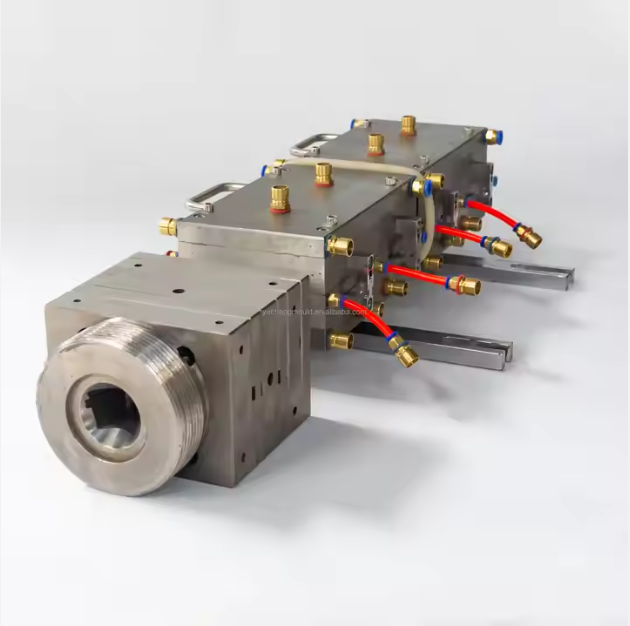
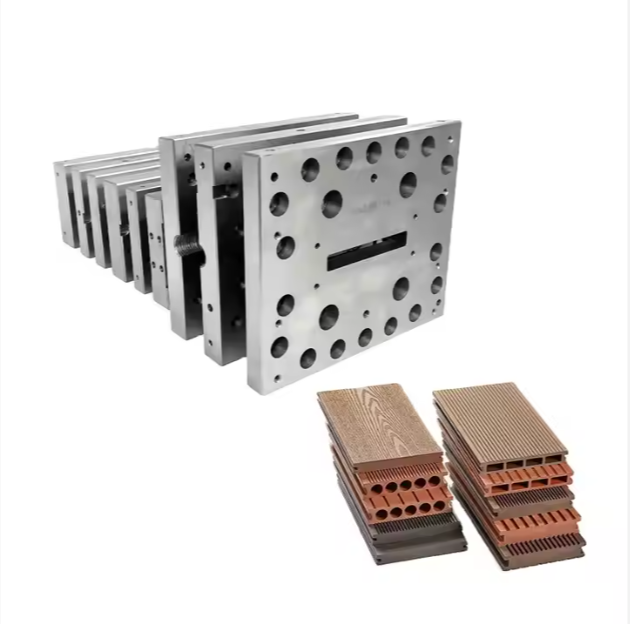
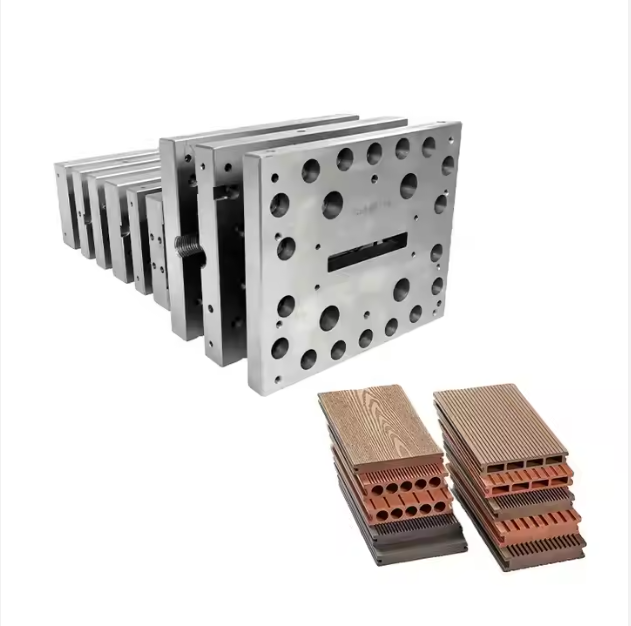
Everything begins with the mould itself. A well-designed extrusion mould determines not only the product’s shape but also its surface texture, density, and strength.
At Junhui Mould, every mould is custom-designed based on the product’s function — whether it’s a PVC foam grid plate, wood-patterned board, or co-extrusion panel.
A small design flaw can lead to uneven surfaces or air bubbles. So, before production starts, engineers spend time testing the mould structure with simulation software to make sure the final result will be flawless.
2. Choose Quality Raw Materials
Even the best mould won’t produce a great product without good raw materials. The PVC resin, foaming agent, and stabilizer must all be balanced carefully.
For example, if you’re making furniture boards or wall panels, you need PVC material with stable density and low shrinkage — otherwise, the surface may warp after cooling.
In short: great materials + great mould = perfect product. It’s that simple (well, kinda).
3. Control the Extrusion Temperature and Speed
Here’s where experience really matters. During extrusion, the temperature and extrusion speed must be perfectly coordinated.
If the temperature is too high, the PVC foam may burn; too low, and it won’t form evenly. Likewise, the extrusion speed affects surface smoothness and density.
This is why at Junhui, operators closely monitor every stage — from pre-heating the mould to cooling the final board — to maintain precise consistency.
4. Regular Maintenance and Cleaning
Let’s be honest: even the most advanced mould will fail if it’s not properly maintained.
Dust, residual material, or tiny scratches can all affect the final surface of your PVC foam board.
That’s why routine cleaning and polishing of the mould’s internal channels is essential. Many manufacturers also apply protective coatings to extend the mould’s lifespan and keep performance stable over time.
So, if you ever wonder why your products suddenly look “off,” check your mould maintenance schedule first!
5. Test and Adjust Continuously
Perfect extrusion doesn’t happen overnight. Manufacturers often run several test batches to fine-tune the mould performance.
Tiny adjustments — such as modifying the pressure, feed rate, or cooling time — can make a big difference in the product’s final quality.
And here’s a fun fact: at Junhui, each mould undergoes a complete testing phase before shipment, ensuring customers can start production immediately without guesswork or frustration. That saves a lot of time (and headaches).
6. Learn from Real-World Applications
Remember those everyday items we mentioned in our last blog — cabinets, panels, signs, and furniture boards?
Each one comes from a slightly different extrusion setup. By learning from how these products perform in real use, manufacturers can adjust moulds to make the next batch even better.
It’s a continuous loop of improvement — design, produce, evaluate, refine — and that’s what keeps companies like Junhui ahead of the game.
Using an extrusion mould isn’t just about shaping PVC materials — it’s about precision, patience, and understanding the balance between design and production.
When moulds are built with care, maintained correctly, and used with the right materials, they can create products that last for years and look just as good as the day they were made.
From our previous discussion on where PVC foam boards are used, to this article about how they’re made, one thing is clear — the mould is the heart of the process. And for Junhui Mould, that’s where perfection begins.